Before MCP, every AI assistant needed its own glue code for every system it touched. Now one well-built server exposes your tools, data and documents to any MCP-compatible client — Claude, ChatGPT, Cursor, your own agents — through a single protocol. We build that server properly.
AGI Software Solutions builds custom MCP (Model Context Protocol) servers that connect AI assistants and agents to your business systems — ERP, CRM, databases, document stores and internal APIs. One server replaces the per-assistant integration code, with authentication, per-user permission boundaries, approval gates on writes and audit logging designed in from the start. Most business MCP servers reach production in 3–8 weeks.
An MCP server is infrastructure: it decides what an AI is allowed to see and do in your systems. That makes the security model, not the protocol plumbing, the real engineering work — and the reason to build it deliberately rather than bolt it on.
One server exposes your systems to Claude, ChatGPT, IDE agents and your own automations — and to the clients that have not shipped yet.
Scoped tool access per user and per client, enforced where the data lives rather than promised in a prompt.
Reads flow freely; consequential writes can require a human sign-off. The server decides, not the model.
Full logging of who asked for what, which tool ran and what changed — the evidence trail AI access to business systems needs.
MCP is an open standard, published by Anthropic in late 2024 and now adopted across the industry, that lets AI applications discover and call tools, read resources and use prompts from external servers through one protocol. Instead of building a separate integration for each AI product, you build one MCP server for your systems and every compatible client can use it.
For a business, an MCP server is the difference between "the AI can tell you about your data" and "the AI can safely look up this customer, draft this invoice, and file this document — within the permissions you set".
Why one protocol layer beats a pile of one-off connectors.
| Per-app integrations | One MCP server | |
|---|---|---|
| Build effort | One integration per AI tool per system | One server, every MCP client |
| New AI client arrives | Another integration project | Works on day one |
| Permissions | Re-implemented in every connector | Enforced once, at the server |
| Audit | Scattered across tools | Every call logged in one place |
| Maintenance | Grows with each connector | One codebase to keep current |
The same process across every AI Development project, scaled to the size of the problem.
We work out what the system actually has to do, what data exists, and what happens today when it goes wrong.
Architecture, model choice, integration points and failure handling, defined before any of it gets built.
Connecting to the systems that hold your data, with security and permission boundaries handled properly.
The system takes on real work, in the workflows your team already uses rather than beside them.
Tuned against real usage and measured with evals, because how people use a system is never quite how it was designed.
The patterns we see deliver, across startups, SMEs and enterprise teams.
Invoices looked up, records created as drafts, stock queried in plain language — through tools scoped to exactly those operations.
Support AI that can read the customer's actual orders, tickets and account state instead of guessing from a knowledge base.
Policies, contracts and internal docs exposed as MCP resources, so every assistant answers from the same governed source.
The same server that serves Claude serves the agents we build for you — one permission model across all of it.
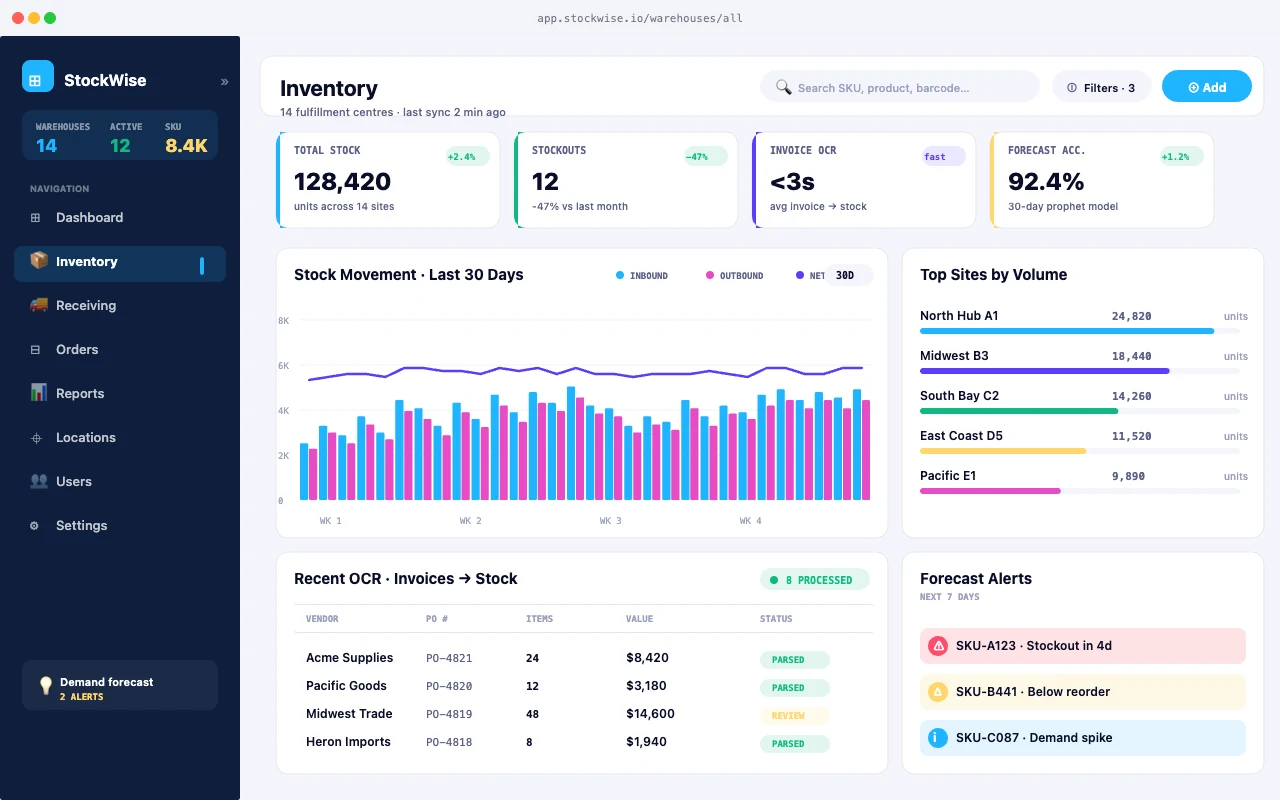
Demand forecasting, OCR-driven receiving and anomaly detection across 14 fulfilment centres.
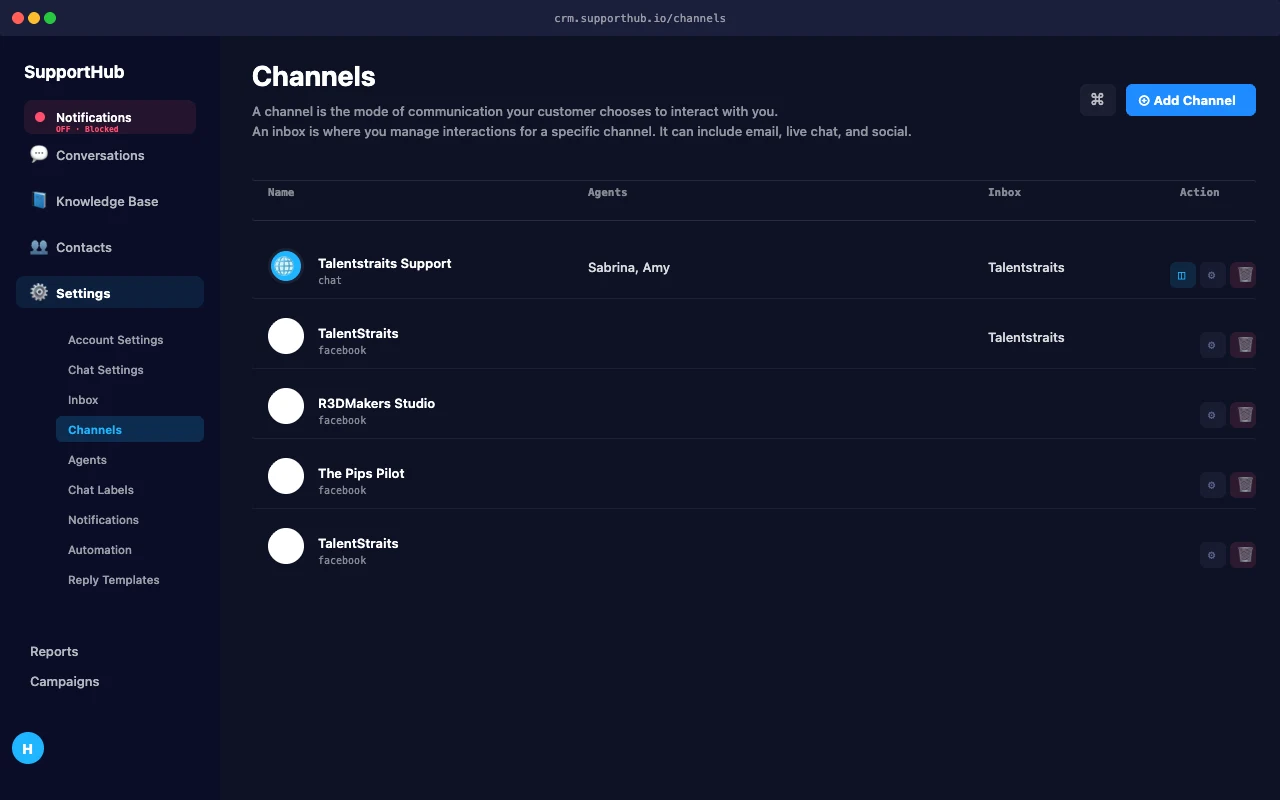
One inbox across web chat, email, WhatsApp and Facebook, with AI replies trained on past resolutions.
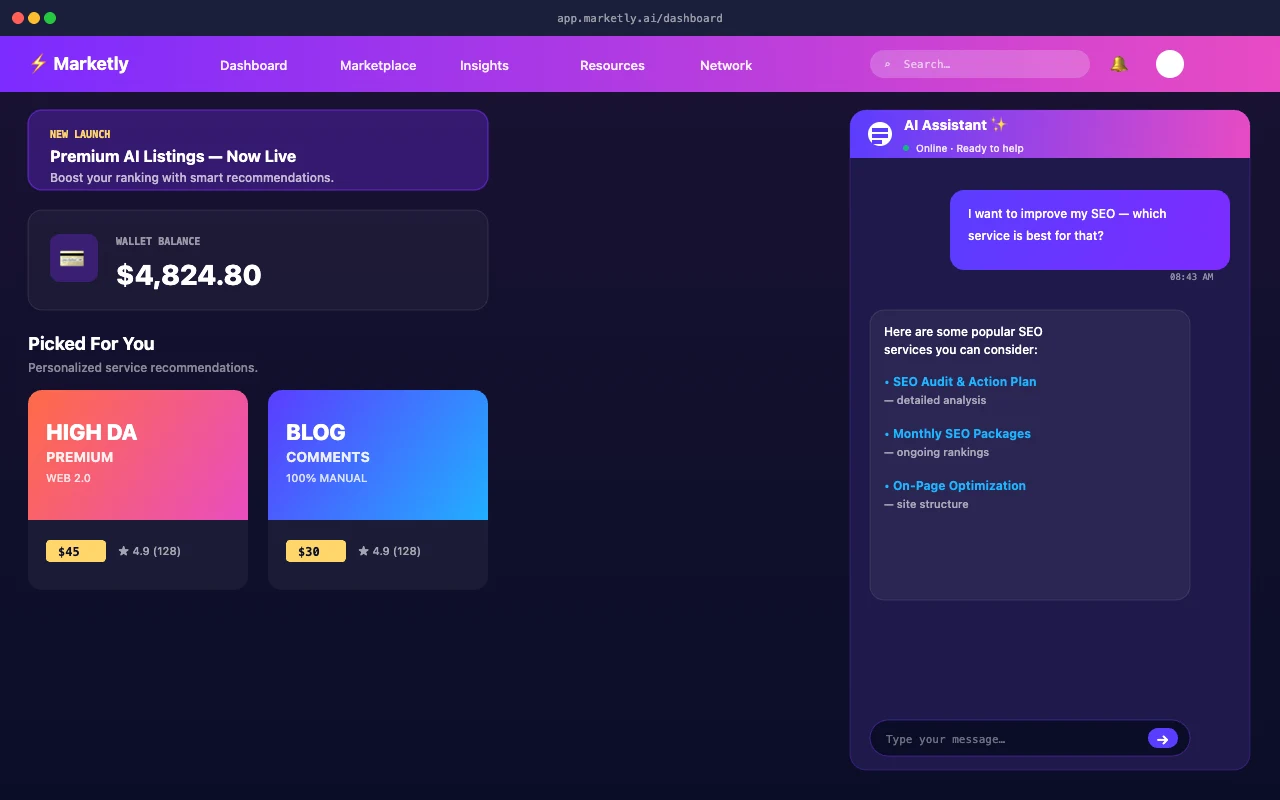
Support chatbot, live SEO analyser and a vector recommendation engine, all sharing one retrieval layer.
“We needed a voice agent that could actually qualify leads, not a chatbot pretending to be one. The team shipped a sub-700ms pipeline in 6 weeks. It now handles 5k calls a day.”
“What sold us was their willingness to put AI engineers and product designers on the same call. We got working prototypes by week two and a production rollout in three months.”
“AGI designed a CRM system tailored to our client management process. It is intuitive, reliable, and has centralized all our communication and history in one dashboard. This has greatly improved client retention.”
A service that exposes your systems to AI applications through the Model Context Protocol: tools the AI can call, resources it can read, and prompts it can use. Any MCP-compatible client — Claude, ChatGPT, Cursor, custom agents — can connect to it.
If exactly one application will ever use the integration, a direct API is fine. If AI assistants or agents are part of the picture — and in 2026 they usually are — MCP means you build the integration once instead of once per AI product.
It is when the server is built for it: scoped tools rather than raw database access, per-user permissions, approval gates on writes, rate limits and full audit logging. That security design is most of our work.
A read-only server over one or two systems: 3–4 weeks. Servers with write operations, approval workflows and several systems: 6–8 weeks. The variable is almost always the systems being connected, not the protocol.
Claude (desktop, web and API), ChatGPT, Cursor, Windsurf and most agent frameworks, with the list growing steadily. Building to the standard is precisely what keeps you off the integration treadmill.
Tell us what the system would need to do and what it is replacing. We will tell you whether it is worth building and roughly what it takes.