ERPNext holds the truth about your business — and consumes hours of retyping, lookup and report assembly to keep it that way. We build AI into ERPNext through the Frappe API: documents that post themselves, questions answered in plain language, and records that stay clean.
AGI Software Solutions builds AI integrations for ERPNext: invoice and document-to-entry automation, natural-language queries over your ERP data, AI-assisted data entry, and MCP servers that let assistants like Claude and ChatGPT work with ERPNext records safely. Everything runs through the Frappe framework's own API and permission system — AI-created entries arrive as drafts for approval until you trust them enough to post.
ERPNext's open architecture is the reason this works so well: a real API, a real permission model, and DocTypes that describe your data. We build against those primitives, so the AI respects the same roles, workflows and validation rules as your team.
Supplier invoices, POs and receipts read by AI and turned into draft ERPNext documents — one production system does this in under three seconds per invoice.
"What is our stock cover on fast movers?" answered from live data in chat, instead of a report request that lands next week.
AI-created entries arrive as drafts inside your existing approval workflow. Autonomy is earned per document type, with an audit trail throughout.
MCP-connected assistants that can look up, create and update records within the exact permissions you grant — no more, ever.
ERPNext AI integration means adding AI capabilities inside your existing ERPNext instance: models that read incoming documents and create the corresponding entries, assistants that answer questions about stock, sales and receivables in plain language, and automations that keep master data clean — all through the Frappe API, respecting your roles and permissions.
Because ERPNext is open source, none of this requires waiting for a vendor roadmap. If your business needs it and the API exposes it, it can be built.
The same process across every AI Development project, scaled to the size of the problem.
We work out what the system actually has to do, what data exists, and what happens today when it goes wrong.
Architecture, model choice, integration points and failure handling, defined before any of it gets built.
Connecting to the systems that hold your data, with security and permission boundaries handled properly.
The system takes on real work, in the workflows your team already uses rather than beside them.
Tuned against real usage and measured with evals, because how people use a system is never quite how it was designed.
The patterns we see deliver, across startups, SMEs and enterprise teams.
Emailed supplier invoices extracted, matched to POs, and posted as draft Purchase Invoices with the exceptions flagged for a person.
Customer emails and PDFs turned into draft Sales Orders, validated against your price lists before anyone touches them.
Reorder suggestions, anomaly flags and plain-language stock queries over live bin data — see our warehouse intelligence case study.
Reconciliation candidates surfaced, aging narratives drafted, and the recurring report pack assembled from live data.
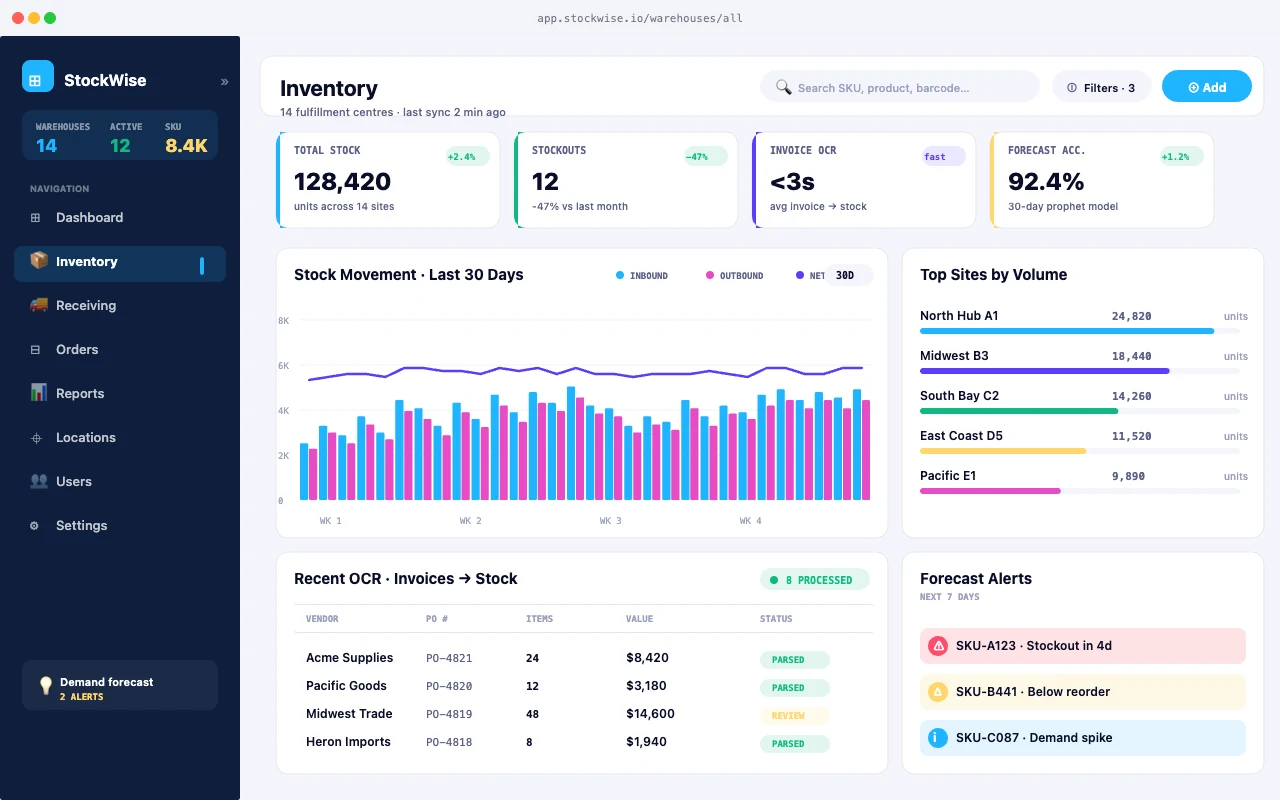
Demand forecasting, OCR-driven receiving and anomaly detection across 14 fulfilment centres.
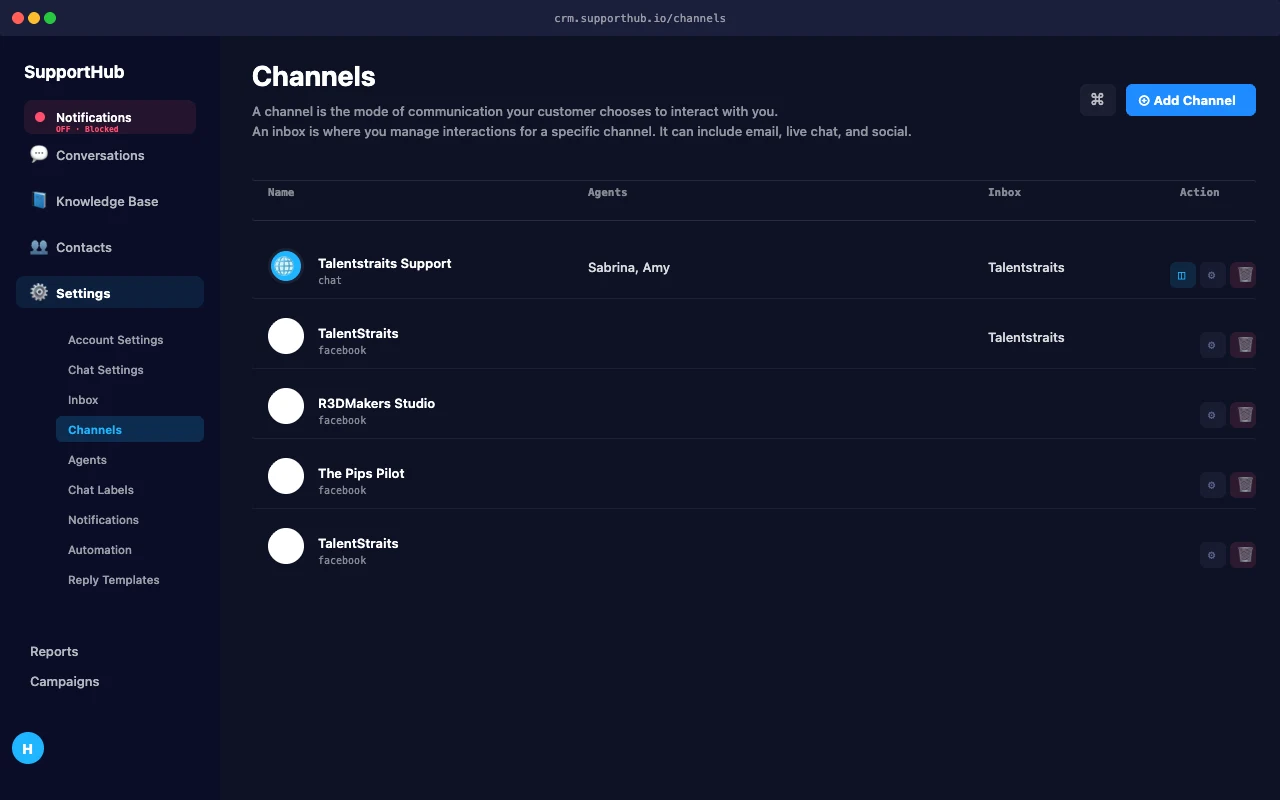
One inbox across web chat, email, WhatsApp and Facebook, with AI replies trained on past resolutions.
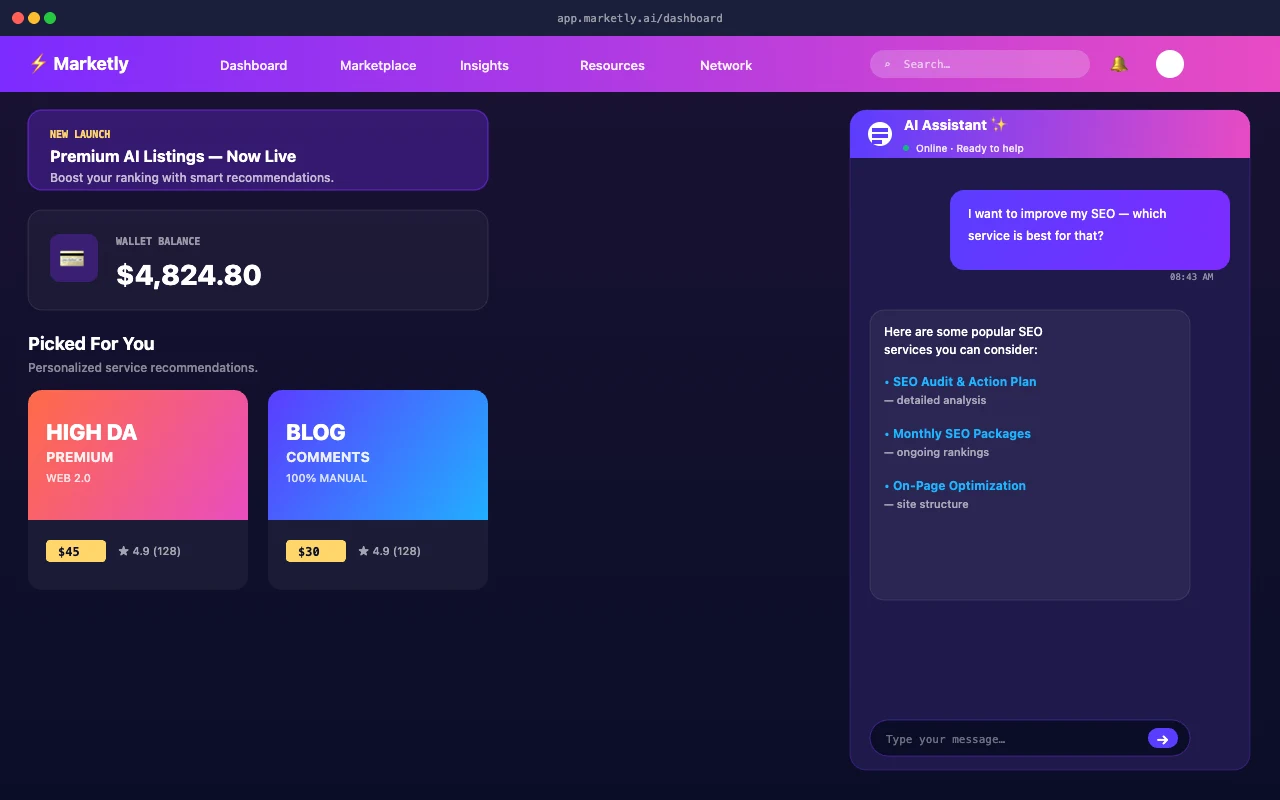
Support chatbot, live SEO analyser and a vector recommendation engine, all sharing one retrieval layer.
“We needed a voice agent that could actually qualify leads, not a chatbot pretending to be one. The team shipped a sub-700ms pipeline in 6 weeks. It now handles 5k calls a day.”
“What sold us was their willingness to put AI engineers and product designers on the same call. We got working prototypes by week two and a production rollout in three months.”
“AGI designed a CRM system tailored to our client management process. It is intuitive, reliable, and has centralized all our communication and history in one dashboard. This has greatly improved client retention.”
Yes, with the right design: AI-created documents arrive as drafts inside your existing approval workflow, validation rules still apply, and every action is logged. Fully automatic posting is something you graduate to per document type, once the accuracy numbers support it.
Only what a given feature needs, and for self-hosted deployments we can keep everything inside your network using open-weight models. Either way, your data is never used to train external models.
Yes to both. Self-hosted and Frappe Cloud, and custom DocTypes are usually where the highest-value automation lives, because they describe the work that is unique to your business.
A single workflow — say, purchase invoice automation — typically runs $10k–$30k. A broader rollout with a chat assistant, several automated document types and an MCP server runs $30k–$80k. ERPNext's clean API keeps integration cost well below proprietary ERP equivalents.
Yes — that is exactly what an MCP server is for. We build one over your instance exposing scoped tools (look up a customer, draft an invoice, check stock), so any MCP-compatible assistant works with your ERP inside the permissions you set.
Tell us what the system would need to do and what it is replacing. We will tell you whether it is worth building and roughly what it takes.