Somewhere in your week there is a person copying data between systems, chasing the same follow-ups, or rebuilding the same report. AI automation is the discipline of finding those workflows, automating the ones that pay, and being honest about the ones that do not.
AGI Software Solutions provides AI automation services for small businesses and mid-market teams: document processing, customer support triage, data entry, reporting and follow-up workflows, automated with AI and wired into the systems you already run. Most clients start with two or three high-volume manual processes and reclaim 10–20 hours of team time per week; typical builds run $10k–$80k, and you own the result — no per-seat subscription.
Not every workflow is worth automating. The ones that are share a shape: high-volume, rule-like, currently manual, and expensive when done wrong. We map your workflows against that shape first, so the build starts where the return is.
We quantify hours and error cost per workflow before automating anything, so the first project is the one with the fastest payback.
You own the automation. No per-seat SaaS meter that turns a saving into a subscription.
Confidence thresholds route the clear cases straight through and the ambiguous ones to a person — the design that makes automation trustworthy.
Every automation ships with a dashboard of items processed, exceptions raised and hours returned — so the ROI is a number, not a feeling.
AI automation applies language models and machine learning to workflows that rules alone could never handle: reading documents that arrive in every format, understanding customer messages, extracting data from unstructured sources, drafting responses. Where classic automation needed everything to be structured first, AI automation works with your processes as they actually are — messy inputs included.
Three different tools, often confused. The honest comparison.
| Zapier / n8n / Make | RPA (bots) | Custom AI automation | |
|---|---|---|---|
| Handles messy inputs | No — structured triggers only | No — breaks when the screen changes | Yes — documents, emails, free text |
| Judgment steps | No | No | Yes, with review thresholds |
| Cost shape | Monthly per-task fees, forever | Licences plus fragile maintenance | One build, you own it |
| Best for | Simple app-to-app triggers | Legacy apps with no API | Workflows involving reading and judgment |
The same process across every AI Development project, scaled to the size of the problem.
We work out what the system actually has to do, what data exists, and what happens today when it goes wrong.
Architecture, model choice, integration points and failure handling, defined before any of it gets built.
Connecting to the systems that hold your data, with security and permission boundaries handled properly.
The system takes on real work, in the workflows your team already uses rather than beside them.
Tuned against real usage and measured with evals, because how people use a system is never quite how it was designed.
The patterns we see deliver, across startups, SMEs and enterprise teams.
Documents arriving by email in every format, read and posted into your systems, with exceptions queued for review.
Incoming messages classified, enriched with account context, drafted a reply, and routed — before your team opens them.
Quotes chased, leads warmed and CRM records kept current automatically — the pipeline work that slips when the week gets busy.
Recurring operational reports assembled and drafted from live data, arriving before anyone asks.
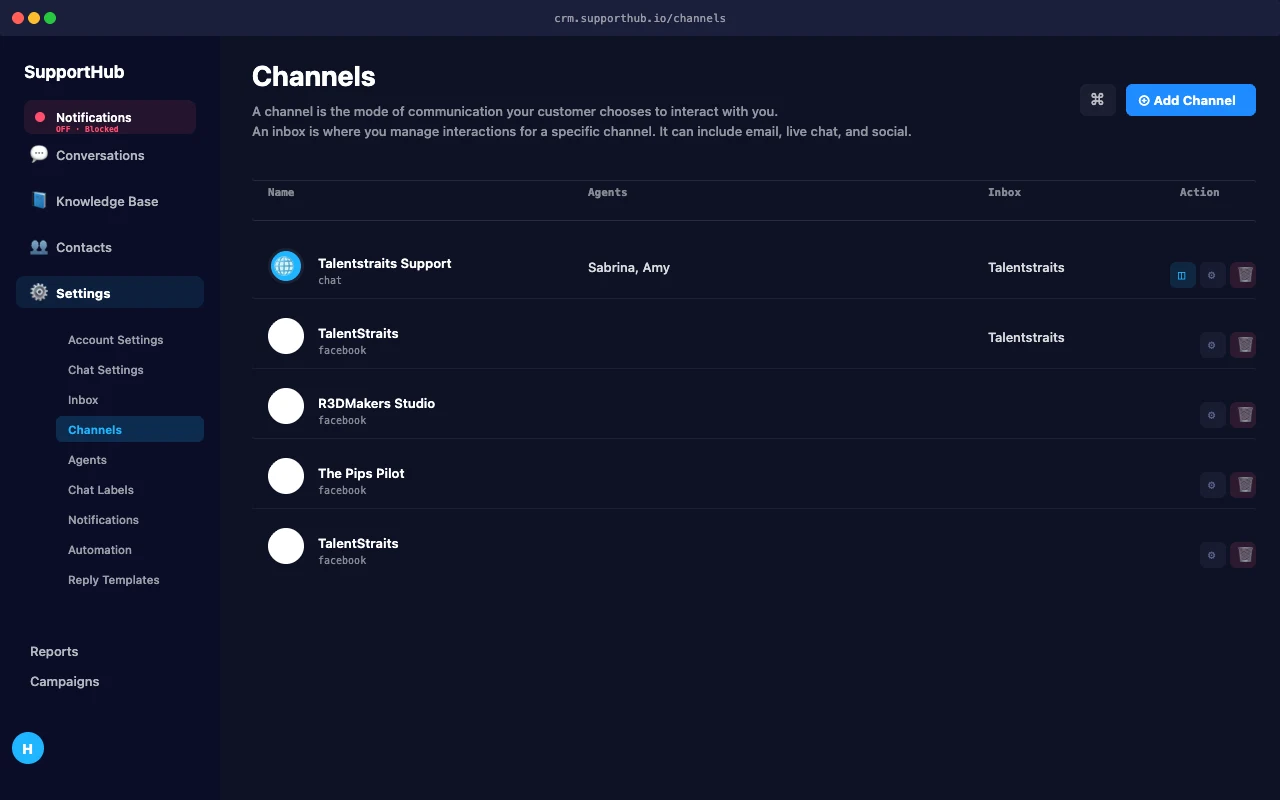
One inbox across web chat, email, WhatsApp and Facebook, with AI replies trained on past resolutions.
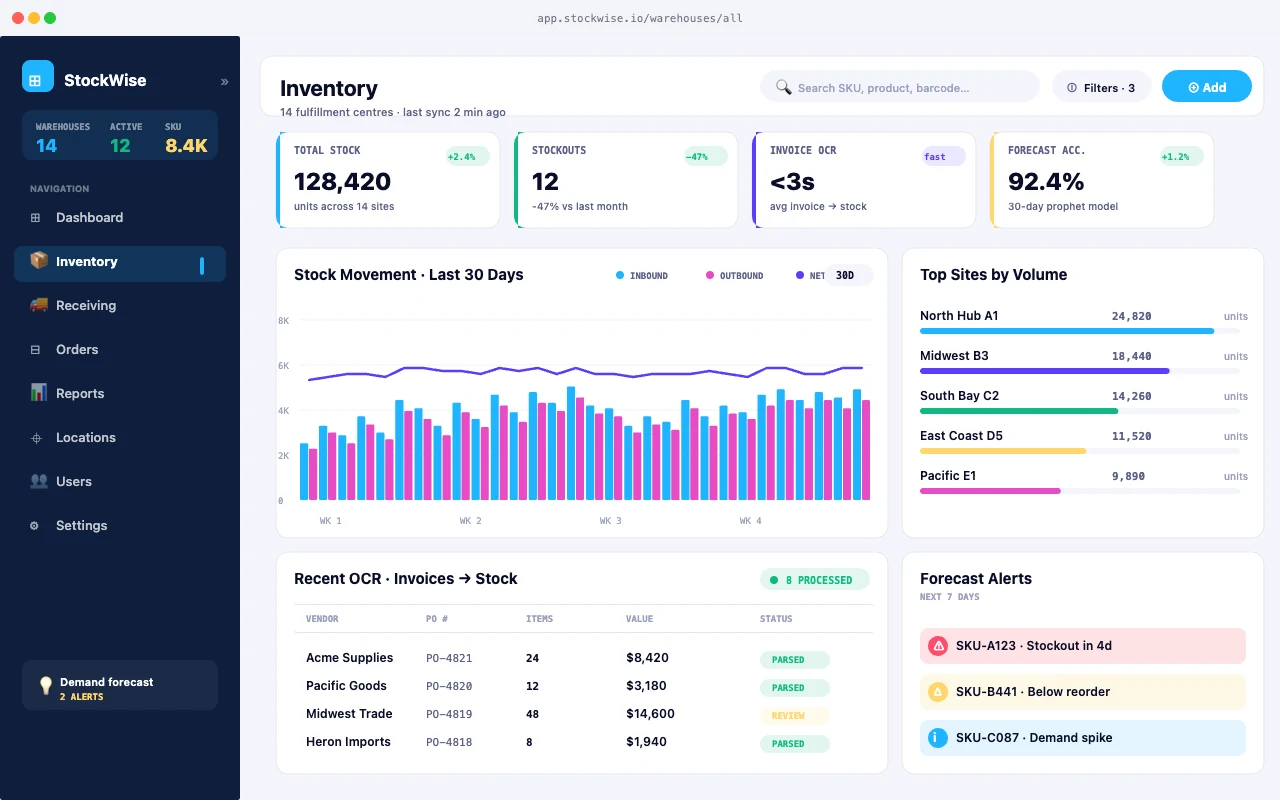
Demand forecasting, OCR-driven receiving and anomaly detection across 14 fulfilment centres.
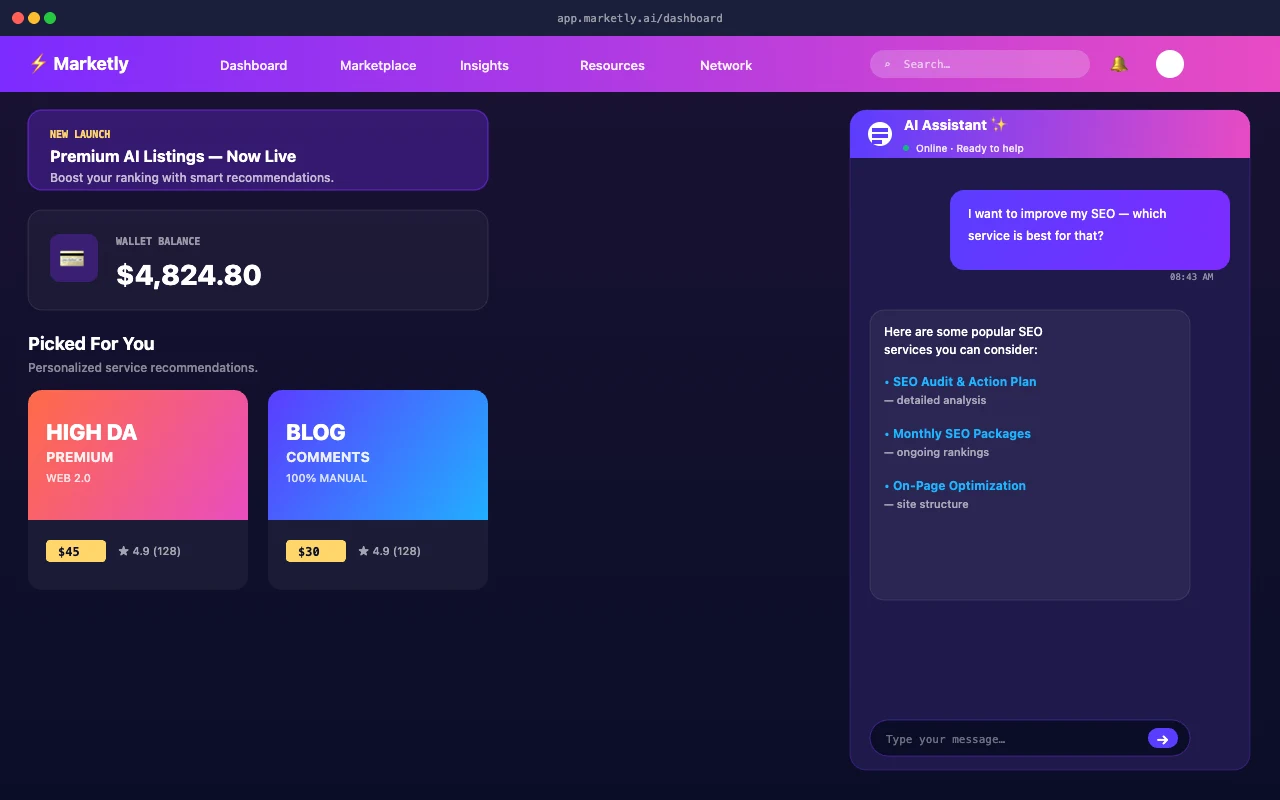
Support chatbot, live SEO analyser and a vector recommendation engine, all sharing one retrieval layer.
“We needed a voice agent that could actually qualify leads, not a chatbot pretending to be one. The team shipped a sub-700ms pipeline in 6 weeks. It now handles 5k calls a day.”
“What sold us was their willingness to put AI engineers and product designers on the same call. We got working prototypes by week two and a production rollout in three months.”
“AGI designed a CRM system tailored to our client management process. It is intuitive, reliable, and has centralized all our communication and history in one dashboard. This has greatly improved client retention.”
The workflow that is high-volume, manual and painful when wrong — for most SMEs that is document processing (invoices, orders), inbox triage, or customer follow-up. Automating two or three such processes typically returns 10–20 hours of team time a week.
A single well-scoped workflow: $10k–$25k. A programme covering several workflows with review queues and dashboards: $30k–$80k. Compare that against the loaded cost of the hours currently spent — the payback period is usually months, and you own the result.
Use them — for structured app-to-app triggers, they are excellent and we build on them where they fit. They cannot read a messy PDF, judge an ambiguous email, or handle the exceptions. AI automation is for the workflows where the input is messy and the step needs judgment.
It is designed for: confidence thresholds send uncertain cases to a review queue, every action is logged, and error rates are tracked per workflow. Automation you cannot audit is automation you cannot trust.
A first workflow is usually live in 4–8 weeks, including the shadow period where the automation runs alongside the manual process until the accuracy numbers earn it autonomy.
Tell us what the system would need to do and what it is replacing. We will tell you whether it is worth building and roughly what it takes.