The system everyone complains about is usually the one nothing can be switched off without. It holds twelve years of data, three undocumented integrations and the only copy of a business rule nobody can now explain. Replacing it is an archaeology problem before it is an engineering one.
AGI Software Solutions modernises ageing business systems incrementally rather than through a rewrite-and-switch: we map what the system does and who depends on it, move one workflow at a time behind a stable interface, and run old and new in parallel until the numbers reconcile. Modernisation programmes typically run $40k–$90k for a single application and $100k–$250k+ for a core system with data migration and multiple dependent integrations.
The full rewrite is the most reliably disastrous pattern in enterprise software: two years of parallel effort, a feature freeze on the system people actually use, and a cutover date that slips until the project is cancelled. Incremental replacement avoids all three.
No feature freeze and no cutover weekend. The old system keeps serving until each replacement has proven itself against it in production.
We read the code and the data to recover the business logic nobody wrote down, and confirm it with the people who rely on it before anything is reimplemented.
Each migrated workflow can be routed back to the legacy system while it settles. Nothing depends on a single irreversible decision.
Old and new run in parallel with automated comparison, so migration finishes when the outputs agree — not when the calendar says so.
Legacy modernisation is the work of moving a business off a system that still works but has become expensive to change — because the framework is unsupported, the original team has gone, the hosting is end-of-life, or every small change now takes weeks. It covers replatforming, re-architecting, data migration and, often, rebuilding the parts nobody can safely touch.
The technique that makes it survivable is the strangler pattern: put a stable interface in front of the old system, move one capability at a time behind it, and let the legacy system shrink until switching it off is a non-event rather than a launch.
We have been asked for the left column many times. We have recommended it approximately never.
| Full rewrite | Incremental migration | |
|---|---|---|
| First value delivered | At cutover, if it arrives | Within weeks, workflow by workflow |
| Risk profile | One enormous switchover | Many small reversible steps |
| The old system | Frozen while you rebuild | Keeps running and keeps improving |
| If priorities change | Sunk cost, nothing shipped | Everything migrated so far still works |
| Data migration | One high-stakes event | Continuous reconciliation, verified as you go |
| Honest success rate | Poor, and well documented | Good, because failure stays small |
The same process on every engineering project, scaled to the size of the problem.
We map what the process actually does today, including the parts that live in one person’s head, and what it costs when it goes wrong.
Data model, integration points, permissions and hosting decided up front, because these are the choices that are expensive to reverse later.
Working software every couple of weeks, sequenced so the riskiest piece reaches real users first rather than last.
Connecting to the systems that hold your data, then security, load and failure testing against realistic volumes instead of demo data.
Documentation, a walkthrough for whoever maintains it, and ongoing support if you want it. The repository is yours either way.
The patterns we see deliver, across startups, SMEs and enterprise teams.
Applications on unsupported frameworks, database versions past their support window, or servers nobody wants to be responsible for patching.
Extracting the parts that need to scale or change often, without the fashionable mistake of shattering a working system into forty services.
Moving years of records with the schema changes, deduplication and verification that make the new numbers trustworthy.
Wrapping a closed system in a clean API so new tools — including AI — can reach the data without touching the legacy code.
Deliberately boring, widely supported technology. The goal is software your team can still hire for in five years.
React, Next.js and TypeScript, with server rendering where it earns its keep for speed or SEO.
FastAPI, Django and Node.js. Python where the work touches data or models, TypeScript where it does not.
PostgreSQL as the default, Redis for caching and queues, and a vector store only when retrieval genuinely needs one.
Docker and Kubernetes on AWS, GCP, Azure or your own servers. Your cloud account, your bill, your control.
REST and GraphQL APIs, webhooks, message queues and MCP servers for the systems that need to talk to AI.
Automated tests, CI on every commit, staged deploys and monitoring wired in before launch rather than after the first outage.
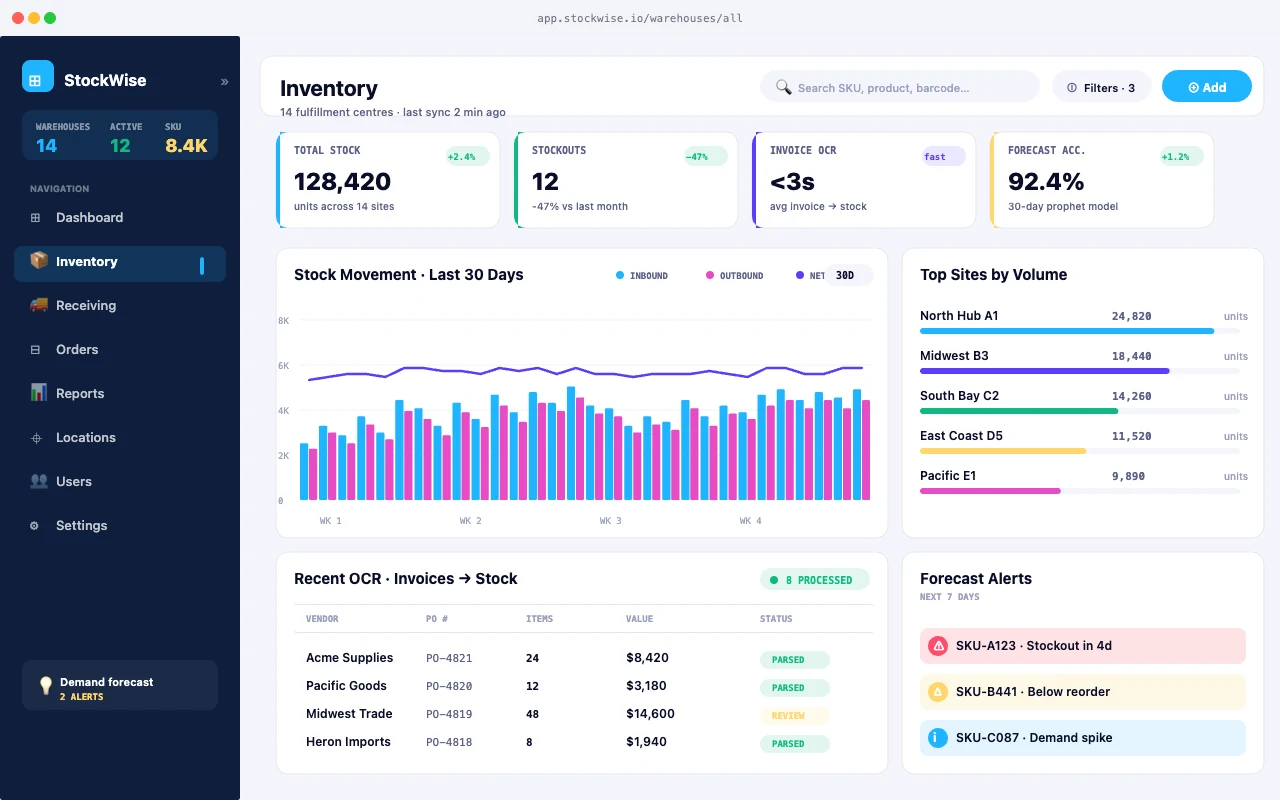
Demand forecasting, OCR-driven receiving and anomaly detection across 14 fulfilment centres.
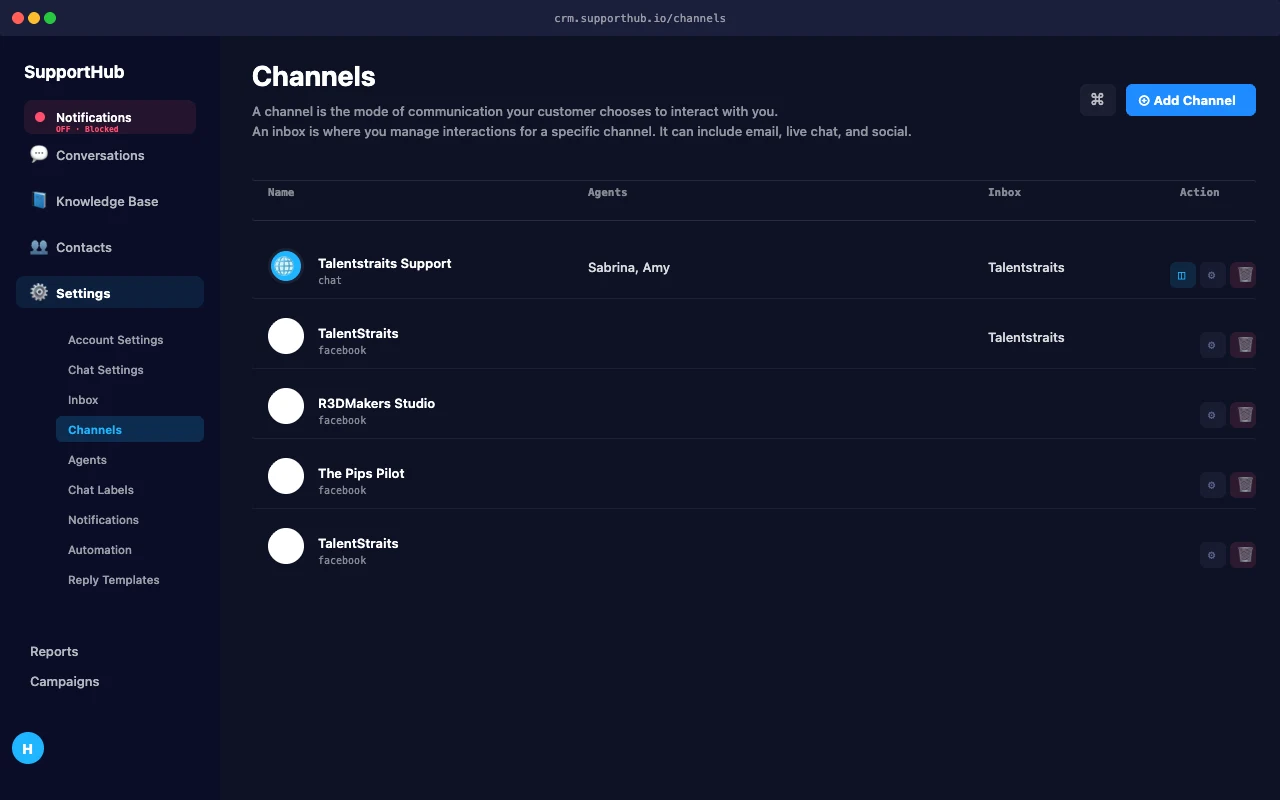
One inbox across web chat, email, WhatsApp and Facebook, with AI replies trained on past resolutions.
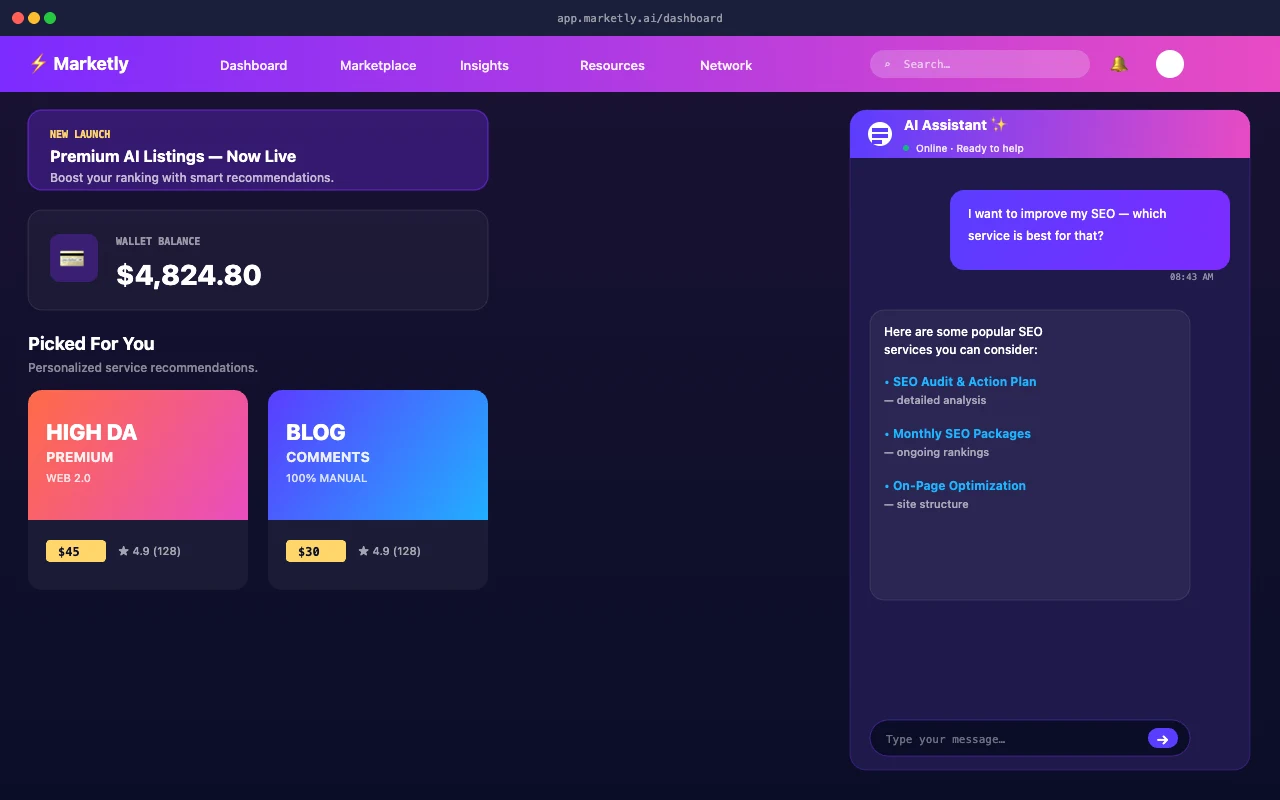
Support chatbot, live SEO analyser and a vector recommendation engine, all sharing one retrieval layer.
“We needed a voice agent that could actually qualify leads, not a chatbot pretending to be one. The team shipped a sub-700ms pipeline in 6 weeks. It now handles 5k calls a day.”
“What sold us was their willingness to put AI engineers and product designers on the same call. We got working prototypes by week two and a production rollout in three months.”
“AGI designed a CRM system tailored to our client management process. It is intuitive, reliable, and has centralized all our communication and history in one dashboard. This has greatly improved client retention.”
A single application replatformed or rebuilt typically runs $40k–$90k. A core business system with substantial data migration and several dependent integrations runs $100k–$250k and up. The dominant cost is almost always understanding and migrating the data, not writing the new code.
In most cases, yes. Workflows move one at a time behind a routing layer, with the legacy system still serving everything not yet migrated. Brief planned windows are sometimes needed for a final data cutover, and we schedule those with you rather than around you.
It is the normal starting position. We recover behaviour from the code, the database and observed traffic, then confirm the reconstructed rules with the people who depend on the outputs. That discovery phase is real work and we scope it explicitly rather than pretending it is free.
Only where a specific component needs to scale or change independently. Splitting a working monolith into many services usually converts one manageable problem into a distributed one. We extract what benefits from extraction and leave the rest alone.
That is often the trigger for the project. Legacy systems block AI because the data cannot be reached; putting a clean API over it during migration is what unblocks document processing, search and assistants later. We would still sequence the migration first.
Everything migrated so far keeps working, and the legacy system carries the rest. That is the point of incremental migration: pausing costs you the remaining benefit, not the investment already made.
Tell us what the system would need to do and what it is replacing. We will tell you whether it is worth building and roughly what it takes.