Enterprise projects rarely fail on the code. They fail on the integration nobody scoped, the compliance requirement discovered in month five, and the department that was never asked what it needed. Those are the parts we scope first.
AGI Software Solutions builds custom enterprise software — operational platforms, internal systems, workflow and data tooling — for organisations whose processes have outgrown the products available to buy. Enterprise programmes typically run $60k–$150k for a single-department system and $150k–$300k+ for cross-department platforms, with integration mapping, permission design and compliance requirements settled before the first sprint rather than discovered during it.
At enterprise scale, the difficulty moves out of the interface and into everything around it: who is allowed to see what, which system is the source of truth, and what happens at month-end when all of it runs at once.
We audit what you already run and where the real source of truth sits, so the integration that derails month five is found in week one.
Roles, approval chains and record-level visibility modelled in the data layer, where they can be enforced, rather than hidden in the interface.
Who changed what, when, and on whose approval — captured as a first-class part of the system rather than reconstructed from logs when someone asks.
Phased cutover with the old system running alongside the new one until the numbers agree. Nobody has to bet the quarter on a launch date.
Enterprise software is the systems an organisation runs its operations on rather than the tools individuals choose: platforms that carry multiple departments, enforce real permission boundaries, integrate with the systems of record, and are audited. The defining constraint is not user count — it is that other systems and other teams depend on it being correct.
That dependency is what changes the engineering. A system with four departments upstream of it cannot be rewritten over a weekend, so the architecture has to make change survivable: clear boundaries, versioned interfaces, and migrations that can be rolled back.
Most enterprises already own something adjacent. This is how we decide whether to extend it or build beside it.
| Extend the existing suite | Custom enterprise build | |
|---|---|---|
| Best for | Processes close to what the suite assumes | Processes the suite cannot express |
| Speed | Faster to first release | Slower to start, faster to change later |
| Ceiling | Whatever the vendor permits | Whatever the business needs |
| Upgrade risk | Customisations break on vendor upgrades | You control the upgrade schedule |
| Total cost | Licences plus specialist consultants | Build cost, then hosting and maintenance |
| Our usual advice | Extend where it fits, honestly | Build where extension keeps breaking |
The same process on every engineering project, scaled to the size of the problem.
We map what the process actually does today, including the parts that live in one person’s head, and what it costs when it goes wrong.
Data model, integration points, permissions and hosting decided up front, because these are the choices that are expensive to reverse later.
Working software every couple of weeks, sequenced so the riskiest piece reaches real users first rather than last.
Connecting to the systems that hold your data, then security, load and failure testing against realistic volumes instead of demo data.
Documentation, a walkthrough for whoever maintains it, and ongoing support if you want it. The repository is yours either way.
The patterns we see deliver, across startups, SMEs and enterprise teams.
Order, dispatch, inspection, maintenance and approval workflows carrying multiple teams, with the exception handling that real operations actually need.
Reporting that reconciles across the systems feeding it, so finance and operations stop arriving at meetings with two different numbers.
HR, procurement, asset and document systems built around your policies instead of a vendor’s assumption of them.
The system everyone complains about but nobody can switch off, replaced in stages while it keeps running.
Deliberately boring, widely supported technology. The goal is software your team can still hire for in five years.
React, Next.js and TypeScript, with server rendering where it earns its keep for speed or SEO.
FastAPI, Django and Node.js. Python where the work touches data or models, TypeScript where it does not.
PostgreSQL as the default, Redis for caching and queues, and a vector store only when retrieval genuinely needs one.
Docker and Kubernetes on AWS, GCP, Azure or your own servers. Your cloud account, your bill, your control.
REST and GraphQL APIs, webhooks, message queues and MCP servers for the systems that need to talk to AI.
Automated tests, CI on every commit, staged deploys and monitoring wired in before launch rather than after the first outage.
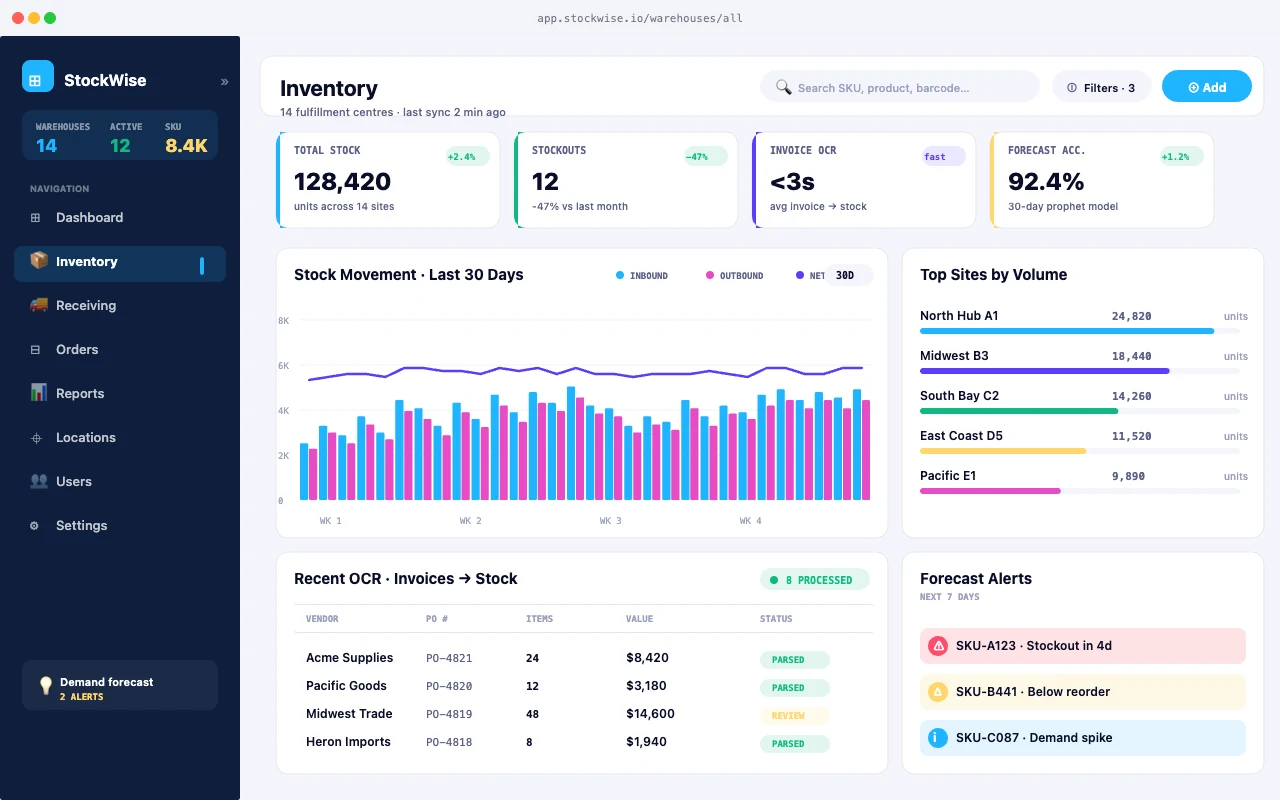
Demand forecasting, OCR-driven receiving and anomaly detection across 14 fulfilment centres.
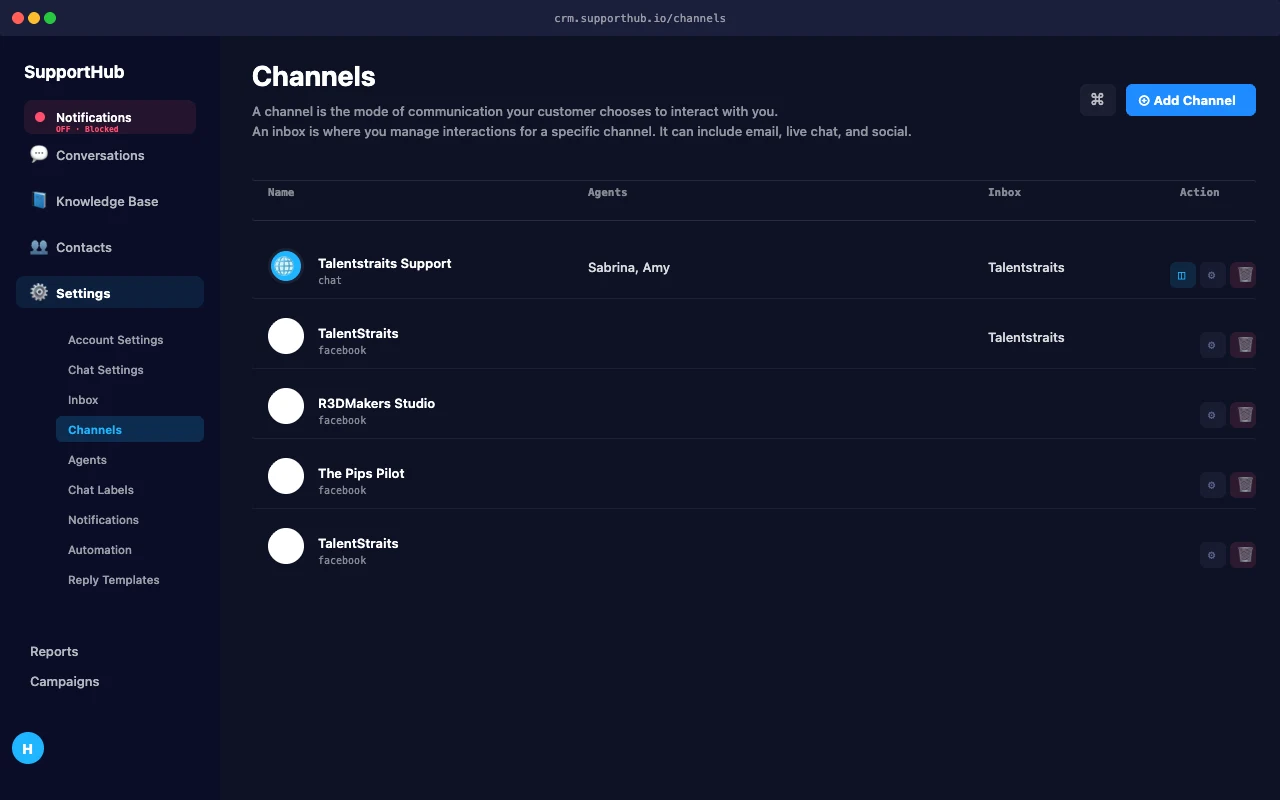
One inbox across web chat, email, WhatsApp and Facebook, with AI replies trained on past resolutions.
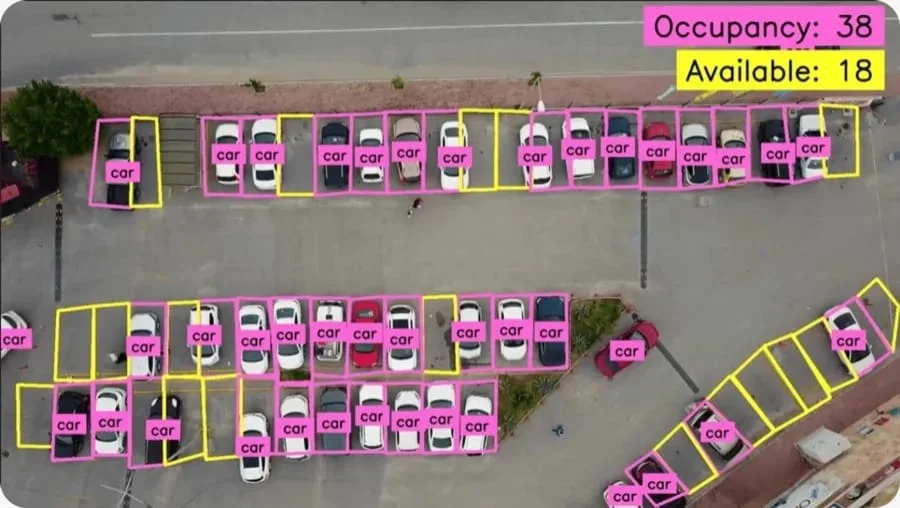
Custom-trained YOLOv8 models running on edge devices, replacing manual visual QA so the line can run around the clock.
“We needed a voice agent that could actually qualify leads, not a chatbot pretending to be one. The team shipped a sub-700ms pipeline in 6 weeks. It now handles 5k calls a day.”
“What sold us was their willingness to put AI engineers and product designers on the same call. We got working prototypes by week two and a production rollout in three months.”
“AGI designed a CRM system tailored to our client management process. It is intuitive, reliable, and has centralized all our communication and history in one dashboard. This has greatly improved client retention.”
A single-department system with a handful of integrations typically runs $60k–$150k. Cross-department platforms with compliance requirements, migration from an existing system and phased rollout run $150k–$300k and up. Integration count and regulatory scope drive the figure far more than feature count does.
Plan on 4–9 months to a first production rollout for a departmental system, and 9–18 months for a platform replacing something central. We release working software throughout, and the first live users are usually inside three months even on the long programmes.
Incrementally. The new system runs alongside the old one, taking one workflow at a time, with data reconciled between the two until the numbers match. Big-bang cutovers are how enterprise projects end up on the news.
Yes — and they need to be on the table in scoping, not raised at UAT. We build to GDPR, SOC 2, HIPAA and ISO 27001 expectations where they apply, with encryption, access control, retention rules and audit logging designed in rather than retrofitted.
Frequently. We can lead the build, work as an embedded part of your team, or take one component while your team takes the rest. If your engineers will own it afterwards, they should be in it from the start.
Whatever you want to happen. Most clients keep us on a maintenance and iteration arrangement for the first year; some take it fully in-house at handover. The documentation and walkthrough are the same either way.
Tell us what the system would need to do and what it is replacing. We will tell you whether it is worth building and roughly what it takes.