AI Copilots

A copilot that knows what screen you are on.

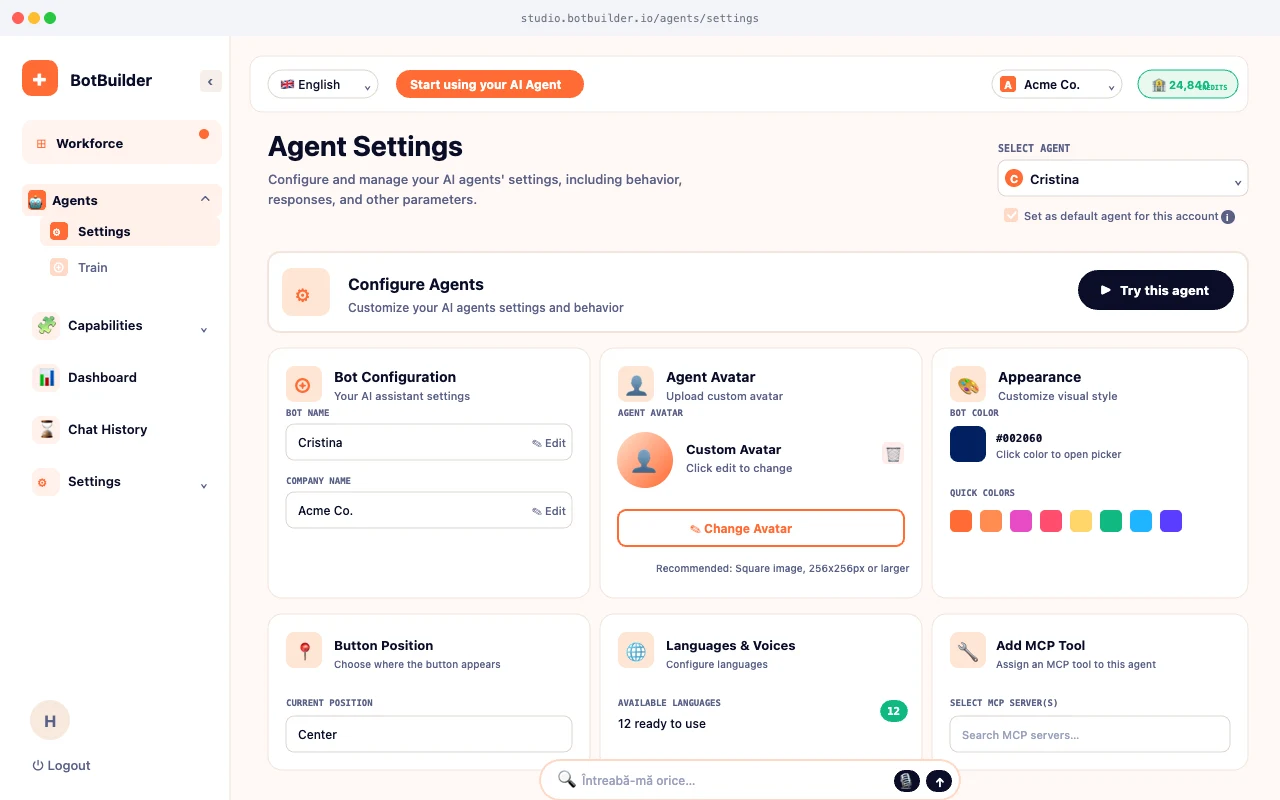
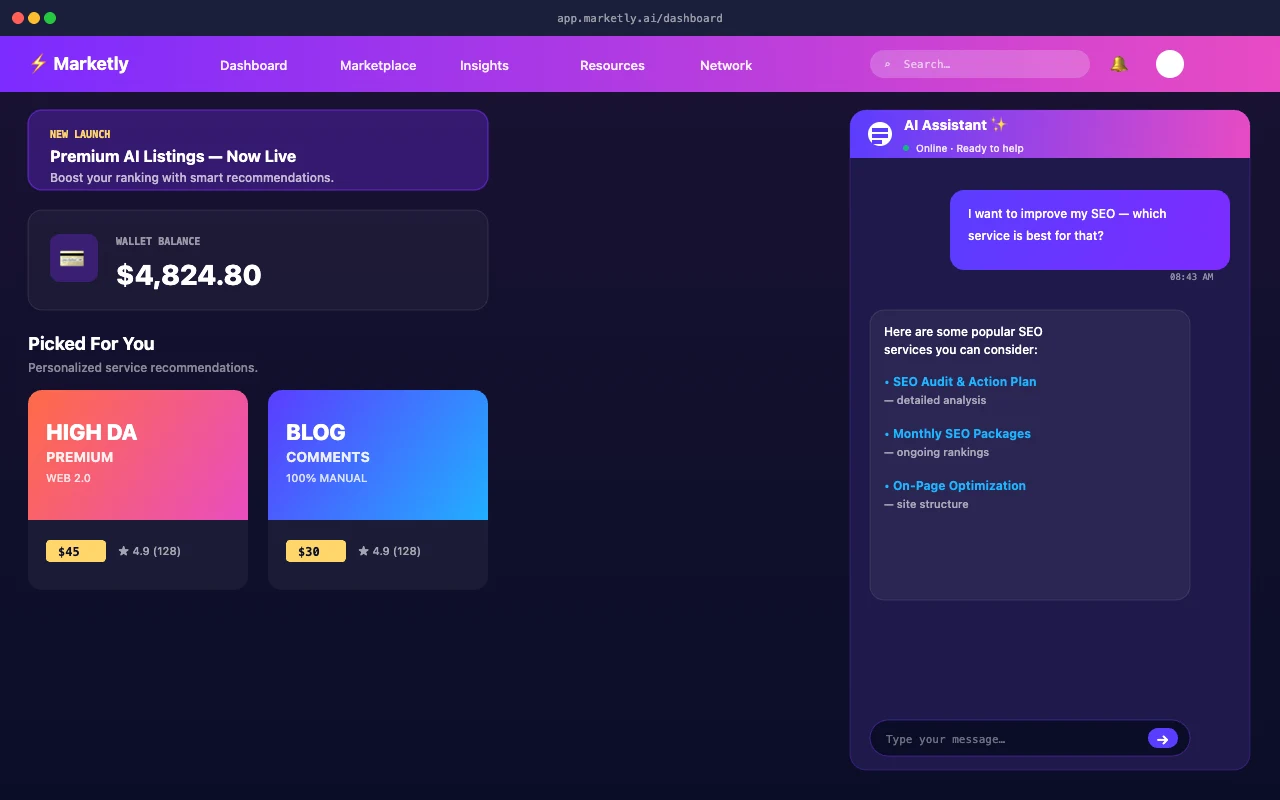
A chat window bolted to the corner of your app is a search box with extra steps. A copilot knows which record is open, what the user is allowed to do with it, and can take the next step for them. That difference is why one gets tried once and the other gets used every day.

In one paragraph

AGI Software Solutions builds AI copilots embedded directly inside your existing product: assistants that read the context of the current screen, draft and summarise in your own interface, and act through the permissions the signed-in user already has. Copilot builds typically run $25k–$45k for a focused assistant on one workflow and $50k–$90k for a product-wide copilot that can take actions — built into the app you already ship rather than beside it.

What We Build

Context is the whole product.

The model is the commodity part. What makes a copilot worth using is that it already knows the customer, the record, the permissions and the last thing the user did — so nobody has to explain any of it before getting help.

Context

Aware of the current screen

The copilot receives the open record, the user’s role and their recent actions, so nobody re-types context the application already has.

Speed

Work pre-done, not just answered

Drafts, summaries and suggested next steps rendered before anyone asks, in the exact place the work would otherwise be done by hand.

Permissions

It can only do what the user can

The copilot inherits the signed-in user’s permissions, so it can never surface or change something they could not reach themselves.

Adoption

No new tab, no new login

Being inside the tool people already have open is the shortest path to usage. Anything that needs a separate rollout mostly does not get one.

Plain English

What is an AI copilot?

An AI copilot is an assistant embedded inside software the user is already working in, aware of what they are looking at and what they are allowed to do. Where a chatbot waits to be asked a question in a separate window, a copilot works from the state of the current screen: the open invoice, the selected customer, the half-finished draft.

The distinction is commercial as much as technical. People adopt a copilot because it removes steps from work they were doing anyway. They abandon a bolted-on chatbot because explaining the situation to it takes longer than just doing the task.

Compared

Copilot vs chatbot vs agent

Three different products that get sold under the same word. This is how we tell clients which one they are asking for.

ChatbotCopilotAgent
Where it livesA window beside the appInside the app interfaceBehind the scenes
What it knowsYour documentsThe screen, record and userThe task and your systems
Who drivesThe user asksThe user, with the work pre-doneThe agent, with approvals
Best forFinding answersMaking a person fasterTaking routine work off people
Typical cost$5k–$50k$25k–$90k$20k–$120k+
How We Build It

Five stages from problem to production.

The same process across every AI Development project, scaled to the size of the problem.

01

Discovery

We work out what the system actually has to do, what data exists, and what happens today when it goes wrong.

02

Design

Architecture, model choice, integration points and failure handling, defined before any of it gets built.

03

Integration

Connecting to the systems that hold your data, with security and permission boundaries handled properly.

04

Automation

The system takes on real work, in the workflows your team already uses rather than beside them.

05

Refine

Tuned against real usage and measured with evals, because how people use a system is never quite how it was designed.

Use Cases

Where AI copilots pay off.

The patterns we see deliver, across startups, SMEs and enterprise teams.

Product

A copilot for your SaaS

An assistant your customers use inside your product — drafting, explaining, configuring and answering from their own tenant’s data.

Internal

Copilot in your admin console

The ops or back-office tool your team lives in, with summarisation, bulk actions and a straight answer to “what changed since Friday”.

Support

Agent assist in the helpdesk

Replies drafted from account history and past resolutions, with the human still deciding what actually gets sent.

Analytics

Ask your own dashboard

Plain-language questions over your reporting, answered with the chart and the underlying query — not a number with no provenance.

Related Work

Systems we have shipped.
What Teams Say

Hear from the teams we work with.

“We needed a voice agent that could actually qualify leads, not a chatbot pretending to be one. The team shipped a sub-700ms pipeline in 6 weeks. It now handles 5k calls a day.”
Priya RajHead of Growth, Ninjatech
“What sold us was their willingness to put AI engineers and product designers on the same call. We got working prototypes by week two and a production rollout in three months.”
James ThorntonCTO, Allindex
“AGI designed a CRM system tailored to our client management process. It is intuitive, reliable, and has centralized all our communication and history in one dashboard. This has greatly improved client retention.”
Carlos MendesProduct Manager, Qilinlab
Common Questions

Before you get in touch.

How is a copilot different from a chatbot?

A chatbot is a separate surface you go to and describe your situation to. A copilot already has the situation — the open record, the user, the permissions — and works from it. In practice that means a copilot needs deep integration with your application state, which a chatbot does not, and that is where most of the build effort goes.

How much does AI copilot development cost?

A focused copilot on one workflow — drafting or summarising inside a single screen — typically runs $25k–$45k. A product-wide copilot that can also take actions across several areas of the app runs $50k–$90k. Running costs are model API usage, usually $0.20–$1.50 per active user per month depending on how much context each call carries.

How long does it take to build?

A first copilot is usually live behind a feature flag in 6–10 weeks. The pacing item is rarely the model — it is getting clean access to application state and deciding which actions the copilot is allowed to take without a human confirming.

Will it respect our existing permissions?

Yes, and this is non-negotiable in how we build. The copilot runs as the signed-in user, not as a service account, so it inherits their access. A copilot that can read across tenants or roles is a data breach with a friendly interface.

Do we need to rewrite our application?

No. We build against your existing codebase and APIs. If parts of the app have no API, we add a thin, scoped layer for the copilot rather than restructuring what already works.

What stops it being confidently wrong?

Three things: grounding answers in your actual data through retrieval rather than the model’s memory, keeping the copilot proposing rather than committing on anything consequential, and evals on a fixed set of real cases so quality is a tracked number. A copilot that quietly guesses costs more trust than it saves time.

Talk to us about ai copilots.

Tell us what the system would need to do and what it is replacing. We will tell you whether it is worth building and roughly what it takes.