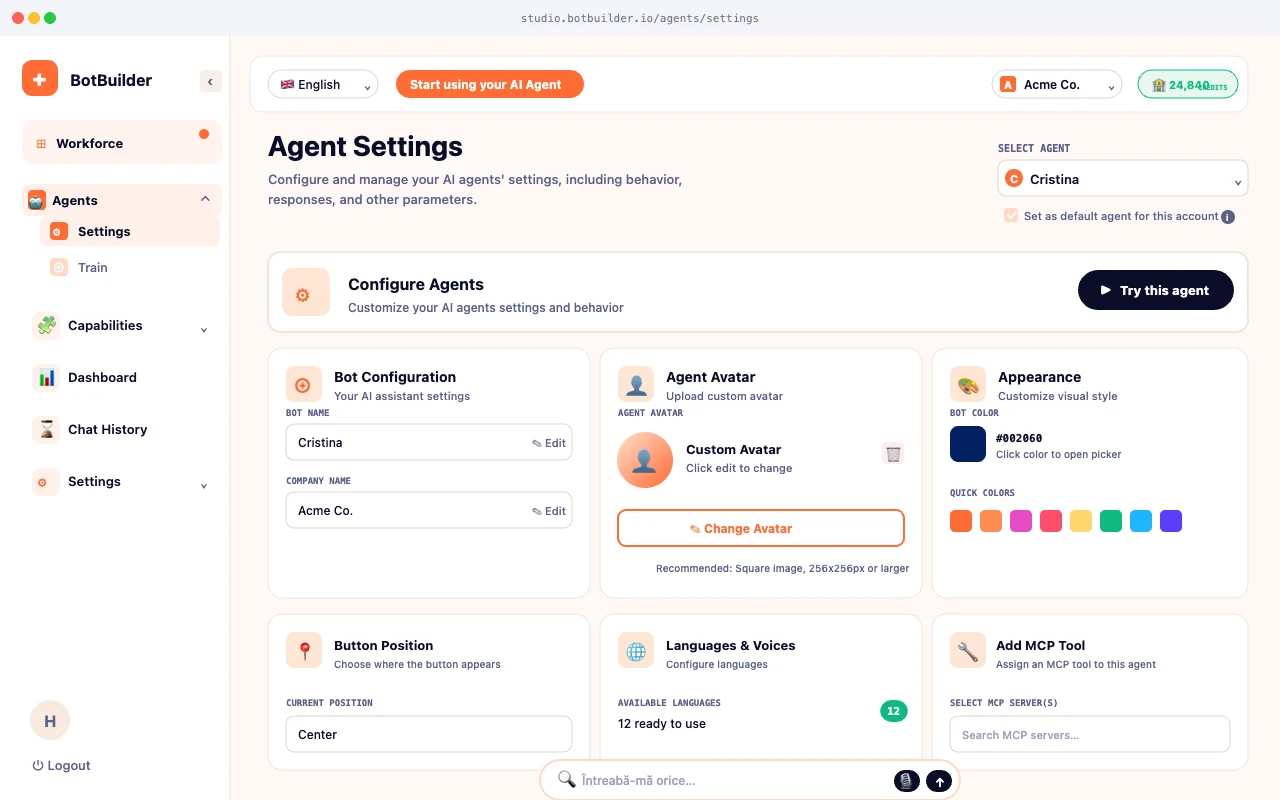
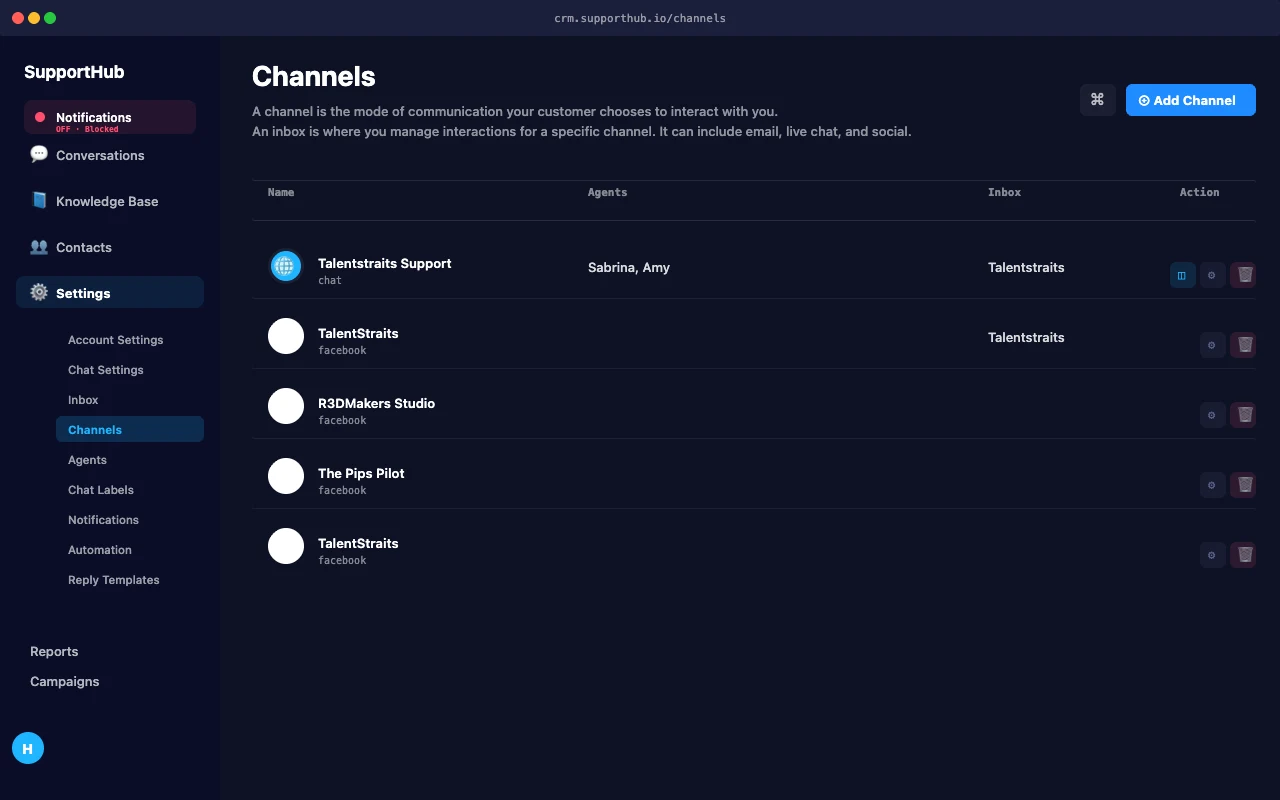
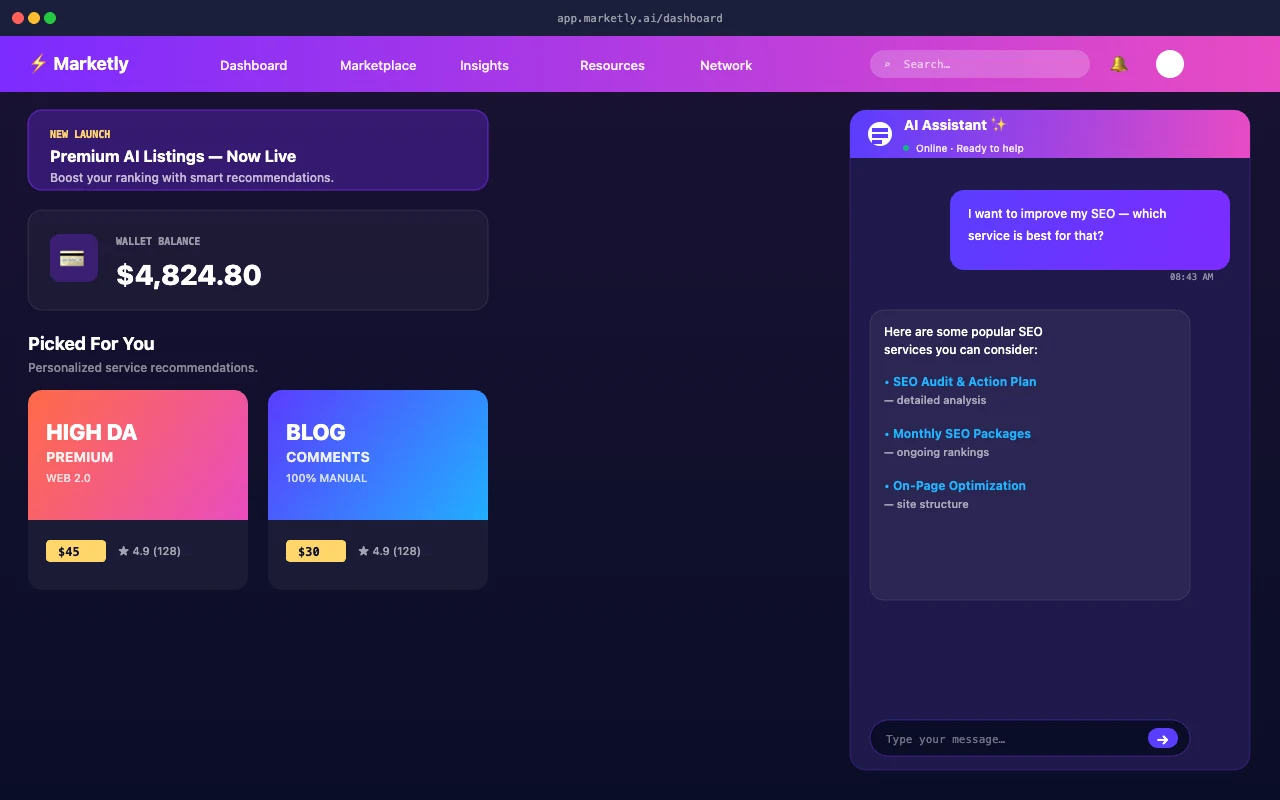
A general model will answer anything, confidently, including things it has no basis for. We build assistants grounded in your own content and wired into your systems, so answers are traceable to a source your team trusts.
AGI Software Solutions builds custom AI chatbots grounded in your own documents and data through retrieval-augmented generation, integrated with the systems that hold the real answers, and tuned to say "I don't know" rather than guess. Custom chatbot development typically runs $5k–$20k for a focused knowledge assistant and $30k–$50k for support chatbots wired into live business systems — and your content is never used to train external models.
The hard part of a useful chatbot is not the conversation. It is retrieval quality, permission handling, and knowing when to say it does not know. That is exactly where generic chatbot products tend to fall down.
Retrieval over your own documentation and data, so every answer can be traced back to where it came from.
Your data is never used to train external models, and permission boundaries are respected at retrieval time, not just in the UI.
The assistant can look things up in the systems that hold the answer, rather than guessing from a stale document dump.
Tuned to say so when the knowledge base does not support an answer. A confident wrong answer costs more than no answer.
A custom AI chatbot is a conversational assistant built on a large language model but grounded in your organisation's own content — documentation, policies, product data, past tickets — retrieved at question time rather than baked into the model. That grounding is what turns a fluent general model into an assistant whose answers your team can check and trust.
When a SaaS chatbot is enough, we will say so. This is the honest split.
| Off-the-shelf product | Custom chatbot | |
|---|---|---|
| Data sources | Uploads and a few connectors | Any system you run, live at answer time |
| Permissions | Usually one shared knowledge pool | Enforced per user at retrieval time |
| Answer quality control | A settings page | Evals, tuned retrieval, honest refusals |
| Cost shape | Per-seat/per-resolution, forever | One build ($5k–$50k) plus modest running costs |
| Right choice when | Generic FAQ over a small site | Support or knowledge work with real stakes |
The same process across every AI Development project, scaled to the size of the problem.
We work out what the system actually has to do, what data exists, and what happens today when it goes wrong.
Architecture, model choice, integration points and failure handling, defined before any of it gets built.
Connecting to the systems that hold your data, with security and permission boundaries handled properly.
The system takes on real work, in the workflows your team already uses rather than beside them.
Tuned against real usage and measured with evals, because how people use a system is never quite how it was designed.
The patterns we see deliver, across startups, SMEs and enterprise teams.
Answers order, billing and product questions from live systems, resolves the routine majority and hands the rest to your team with full context.
One place to ask about policies, processes and documentation, with answers cited back to the source page.
Appointment, preparation and service questions answered from approved content only — with the compliance boundaries that sector demands.
Product and pricing questions answered accurately from your catalogue, qualifying leads before a human picks up.
Context-aware multi-channel chat that qualifies inbound leads and routes them to the right person.
One inbox across web chat, email, WhatsApp and Facebook, with AI replies trained on past resolutions.
Support chatbot, live SEO analyser and a vector recommendation engine, all sharing one retrieval layer.
“We needed a voice agent that could actually qualify leads, not a chatbot pretending to be one. The team shipped a sub-700ms pipeline in 6 weeks. It now handles 5k calls a day.”
“What sold us was their willingness to put AI engineers and product designers on the same call. We got working prototypes by week two and a production rollout in three months.”
“AGI designed a CRM system tailored to our client management process. It is intuitive, reliable, and has centralized all our communication and history in one dashboard. This has greatly improved client retention.”
No. Your content is used for retrieval at query time, not to train an external model. That distinction matters for both accuracy and confidentiality.
A grounded knowledge chatbot typically runs $5k–$20k. Support chatbots integrated with live systems (orders, billing, CRM) run $30k–$50k. Ongoing costs are mostly LLM API usage and hosting, usually a few hundred dollars a month at SME scale.
Yes, and it should. Permissions are applied during retrieval, so a user never gets an answer synthesised from a document they could not open themselves.
If the pain is finding answers, a chatbot. If the pain is doing the work after the answer — updating records, sending confirmations, processing requests — that is an agent, which is a bigger build with more oversight. Many projects start as a chatbot and graduate.
It says so. That behaviour is a design decision and a tuning target. An assistant that bluffs is worse than no assistant, because people stop being able to trust any of its answers.
Tell us what the system would need to do and what it is replacing. We will tell you whether it is worth building and roughly what it takes.